The Losen/Theloosen
Original research by Eric Theloosen
Translated, edited and updated by Henry Theloosen (2011)
The first mention of a person with a surname resembling "Theloosen" is from around 1236 according to Eric Theloosen. It is in reference to one Arnoldus, squire "de Loehusen". The family name was probably original "Toe Loehusen", which meant "people who lived in the houses near the forest". Similar family names still exist in
The Netherlands, e.g. te Loohuisen, van Loohuisen, Loohuijsen etc. There is absolutely no proof that this Arnoldus is directly related to the "The Losen/Theloosen" families. But who knows? However, there is a family branch with a crest (see picture) that portends to show tree trunks. So, maybe there is a connection.
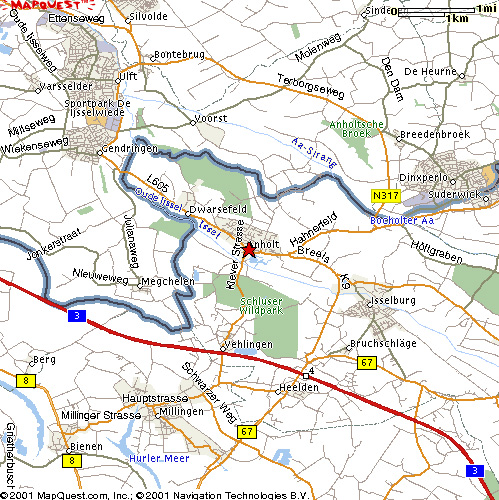
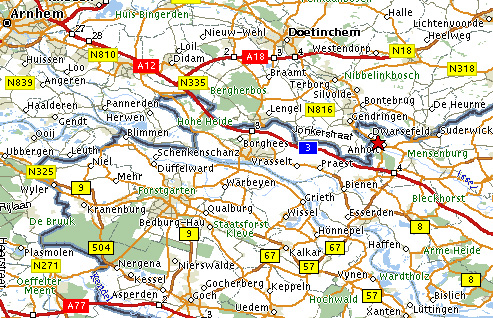
The next mention of the name is from around 1500 when in Vehlingen or Vehlen (see map) a person named "
Jan Toe Losen or The Losen" lived. The farm where he, his ancestors and his descendants used to live, was called "de Loosenhof". This farmhouse was demolished in the nineteen seventies. Jan was a farmer and a town judge (schepen). In 1580, during the Dutch/Spanish war (Dutch War of Independence from 1568 to 1648), his heirs moved to the nearby town of Anholt (about 0.6 miles), that presently is right on the border between Germany and
The Netherlands.
Wikipedia has an interesting article (in German or Dutch) about this town and its history. In those days the countries Germany and the Netherlands did not exist. This area was “owned” by the Count of Anholt and the inhabitants were “subjects”. Descendants of the family remained in that town for several centuries. Their occupations included baker, pub owner, grocer, and wine merchant. The spelling of the name at times varied, but was mostly "The Losen" in the church annals. Recently I discovered that in the town of Bedburg-Hau, south-east of Kleve, there is a community building called "Loosenhof". But I don't know if there is a relationship to our family name.
In 1663-1664
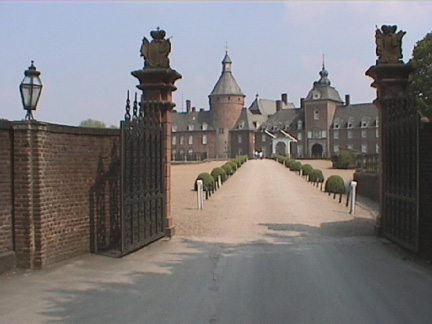
Jan Ter (The) Losen, ancestor of the "Theloosen" and some other branches moved to Xanten, a town close by (situated at the Rhine river), after his marriage to Henrietta van Vehlen in Anholt and became a blacksmith there. I call this part of the family the Xanten Branch. The remainder of the family stayed in Anholt. Jan’s brother became mayor of the town and that job stayed in that branch of the family for a few generations. They also got high positions at the court of the Count of Anholt. Click
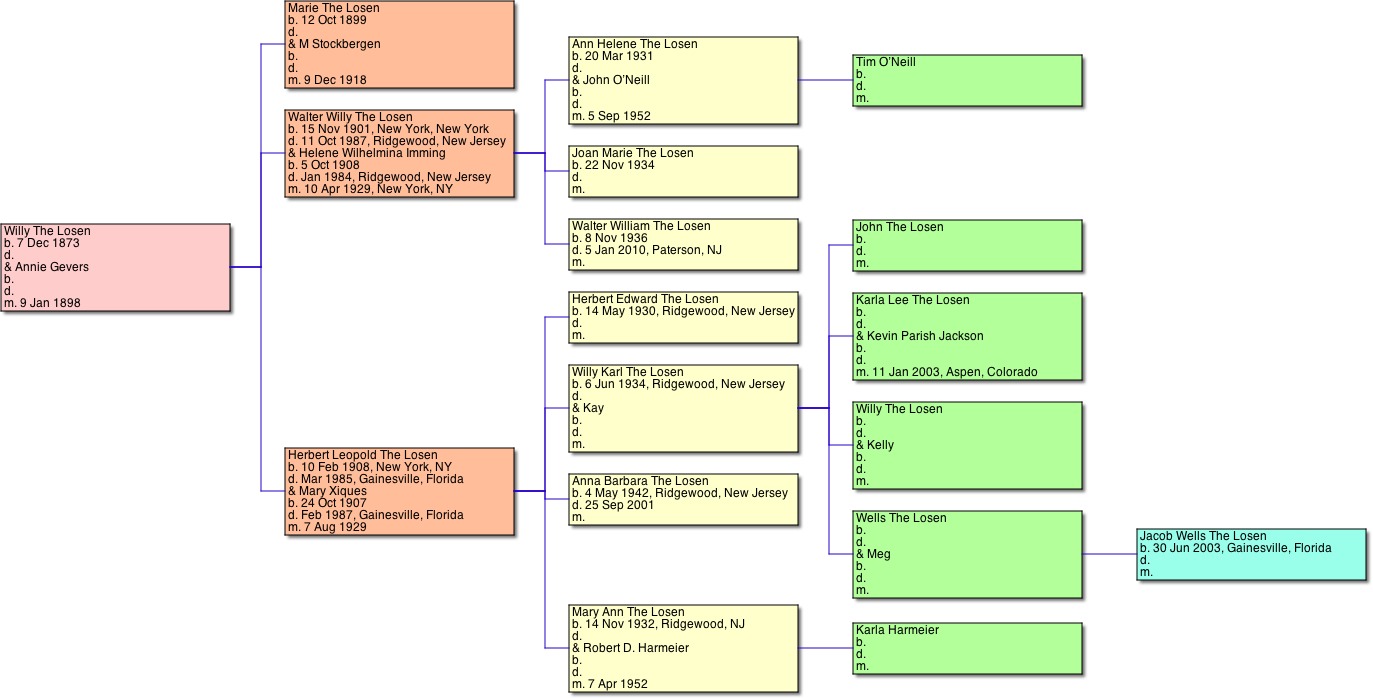
here for more info on the castle and the Counts/Princes. However, they lost those privileges with the arrival of the French Revolution in that part of Europe and the family split up and moved on. One became a forest ranger and some his descendants became lawyers and generals. They lived in and around Muenchen and used the name "The Losen". This branch has probably died out. Another son moved to Eupen, (First Germany, now Belgium), and went into textile manufacturing. Four of his sons went to Vienna, Austria to continue that trade while the others stayed in Eupen and became quite wealthy and influential in the German state Rhineland. Two sons moved to the USA around 1890 and one descendant lives now in Maryland, while another is in Florida and they still spell their name
The Losen or TheLosen.
While quite a bit of information has been gleaned about those family branches, little has been found of the "Theloosen" branch. As mentioned before, Jan Thelosen moved to Xanten and became a blacksmith and this trade stayed in this family for a number of generations. Just like the French Revolution had an impact on the family that stayed in Anholt, it also impacted the "Theloosen" branch from Xanten.
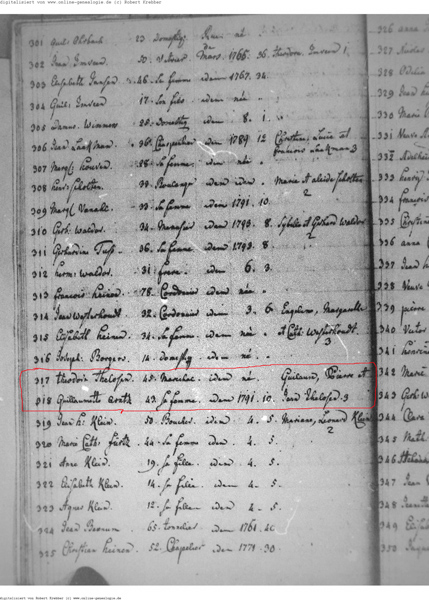
The 1801 census in Xanten shows a population of 1404 of which 14 were named "Thelosen" including
Theodore, a blacksmith (marechal), his wife Wilhelmina (They got married in the town of Venlo in the Netherlands) and three children, Wilhelm (Guillaume), Peter (Pierre) and Johan (Jean) who lived in the "Rue de Maes" or "Rue de Mars". By clicking on this image you can see a copy of the actual census. In the 1802 census another child, Gerhard, was added. In 1802/1803 Theodore and his family moved to Frasselt part of Kranenburg, a small town close to the border with The Netherlands near Nijmegen. The 1802/1803 census there lists him as "Thierry Terloosen" with his wife and 4 sons. Another census a few years later only mention him, another female person and his youngest son, Gerhard. It looks that Theodore's wife (Wilhelmina) had passed away and the three oldest sons had moved out, probably to Nuetterden, another hamlet near Kranenburg. The youngest son, Gerhard, late moved across the border of the Netherlands and got married in Arnhem, I have not been able to find descendants from him. The second youngest son (Wilhelm), married Elisabeth Willemsen and had two sons (Theodor and Gerhard).
moved across the border to Groesbeek got married there and later became a farmer in Cuijk, and owned a farmhouse that was called "De Kalkhof". He spelled his name as "Thelosen" and a number of his descendants still live in the province of Brabant in the Netherlands. However, one of them,
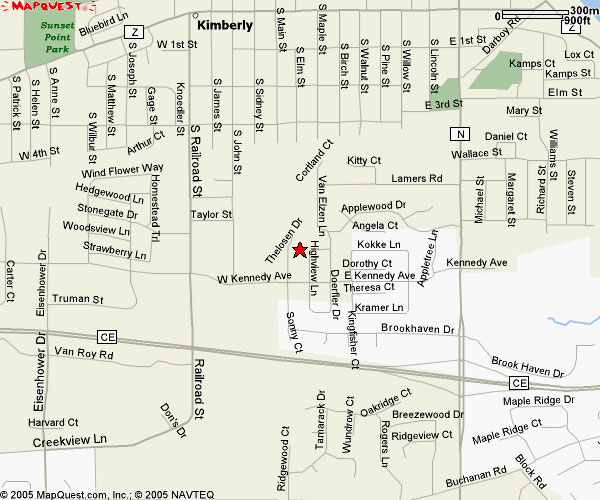
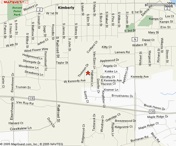
Theodorus, also moved to the USA, to a town called Kimberly in Wisconsin. There are streets named after him or his son and two daughters (Thelosen Drive).
The oldest son of Theodore and Wilhelmina (Petrus) married a girl from Gennep in the Netherlands and had seven children but stayed on the German side of the border. His eldest son, Wilhelm Thelosen moved in 1862 to Hatert (a small village southwest of Nijmegen in those days, now part of Nijmegen) probably because of the German/Franco war, and became a pig farmer. One of his sisters also permanently moved to the Netherlands, the remainder of the family stayed in the Nuetterden/Kleve area,( his father, Peter, passed away in 1868 in Nuetterden) and their descendants spell their name "Thelosen". One of them even became mayor of the town of Kleve in the nineteen nineties.
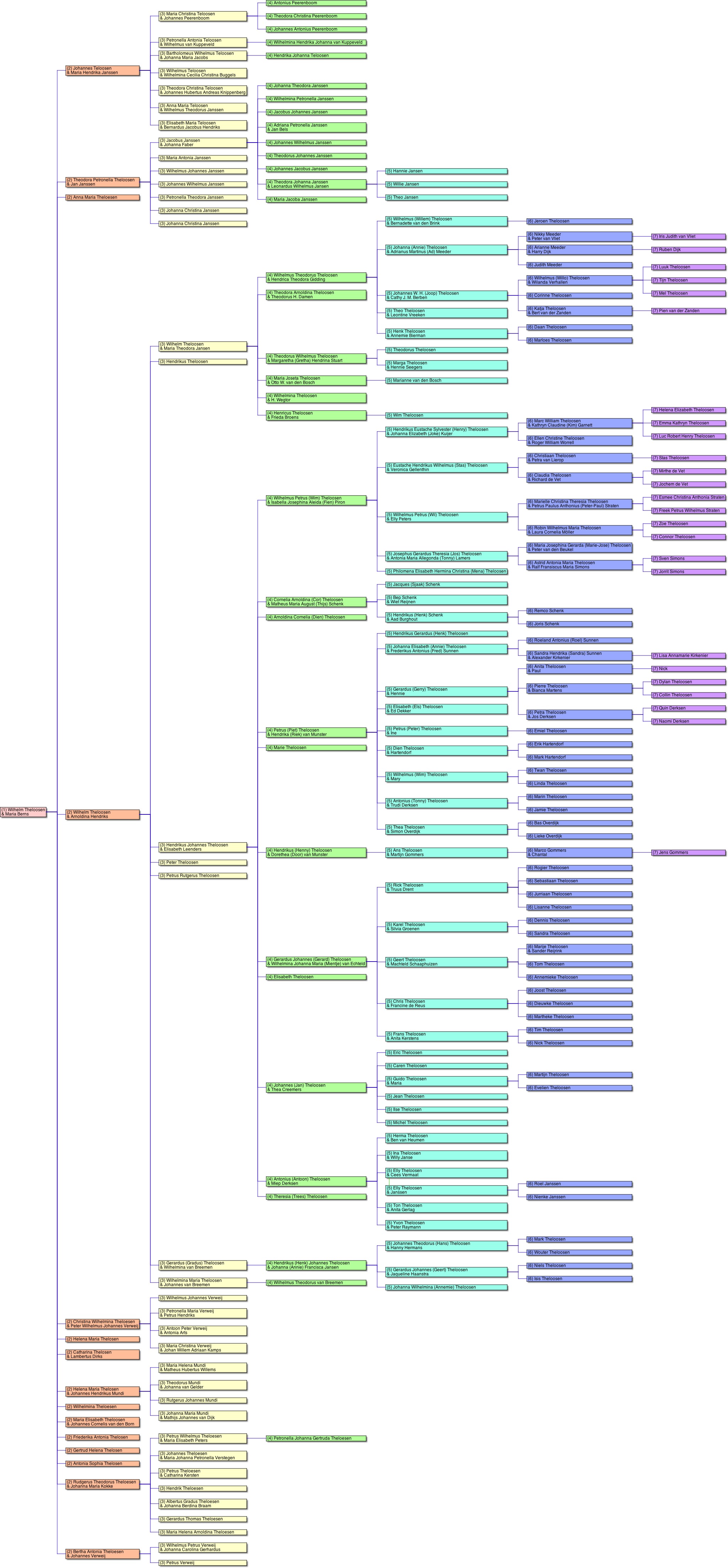
However, before coming to the Netherlands, Wilhelm Thelosen married Maria Berns in 1843 in Nuetterden. They had 14 children, of which a few died very young, ten of them including the three sons moved with their parents to Hatert/Nijmegen. At time of their birth registration in Nuetterden, the last names of the children were not spelled the same way. At time of registration in the Netherlands, the authorities maintained that spelling and thus the three sons ended-up with three different last names. Johannes Teloosen, lived in Nijmegen, Wilhelmus Theloosen whose descendants live mostly around Nijmegen and Elst and Budgerus (Rut) Theloesen (Nijmegen).
My thanks to Hans Thelosen, Vincent Thelosen and Willo Theloosen for their help with constructing the Cuijk and Elst branches.
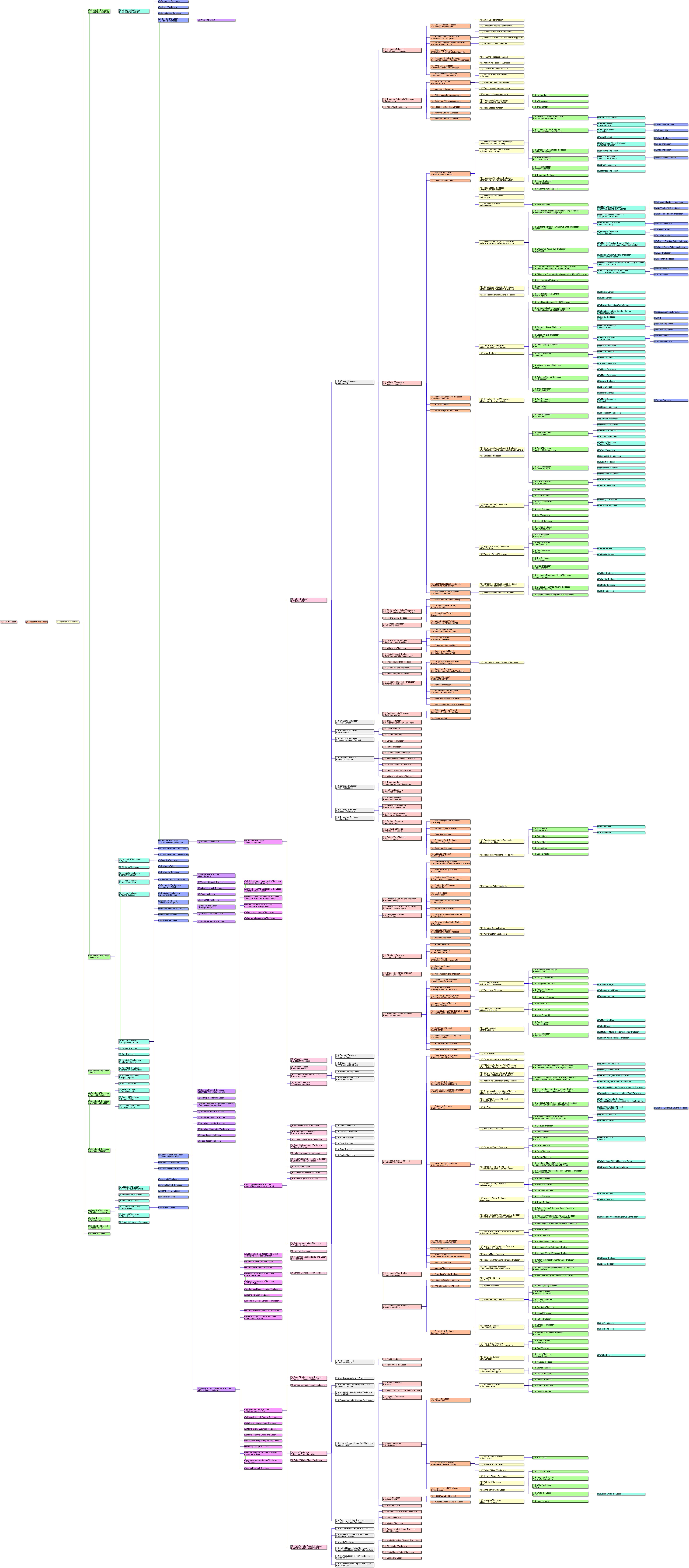
Click here to access the total family index or here for the full family tree (Click inside tree to enlarge). This tree contains 16 generations and is thus VERY LARGE. The orientation of the tree is from left to right. The number before the name refers to the generation. The family history report associated with this tree can be accessed here.
Also check out Hans Thelosen's (Cuijkse branch) website.
© Henry Theloosen 2011